[MDREX NEWSLETTER] MDREX, MOU Signed with D&A LLC — Address
MDREX, MOU Signed with D&A LLC —
Addressing Medical Device Regulatory and Legal Issues Together
|
|
|
On October 26, 2026, MDREX signed a memorandum of understanding (MOU) with D&A LLC (formerly known as DR & AJU) to provide specialized regulatory and legal services for the medical device industry. Through this agreement, the two organizations established
a collaborative framework to provide comprehensive support for regulatory and legal issues arising as medical device, in vitro diagnostic medical device, and digital medical product companies enter Korean and international markets. To launch products and expand their businesses, medical device companies must meet a range of regulatory requirements, including regulatory approval, GMP certification, reimbursement listing, and distribution. In doing so, they may also face legal issues involving contracts, the management of rights relating to regulatory authorizations, regulatory compliance, administrative sanctions, and disputes.
By combining MDREX’s expertise in medical device regulation, reimbursement listing, and market access with D&A LLC’s legal expertise, we aim to help companies address complex regulatory and legal issues more systematically and efficiently.
1. Overview of the MOU
The signing ceremony was held on October 26 in the main conference room of D&A LLC on the 20th floor of Donghoon Tower, Teheran-ro, Gangnam-gu, Seoul. To jointly provide legal services and regulatory consulting for the medical device industry, the two organizations agreed to cooperate in three areas:
| ① |
Supporting overseas medical device companies entering Korea (Inbound) |
| ② |
Supporting Korean medical device companies expanding overseas (Outbound) |
| ③ |
Joint marketing to support entry into Korean and international markets |
|
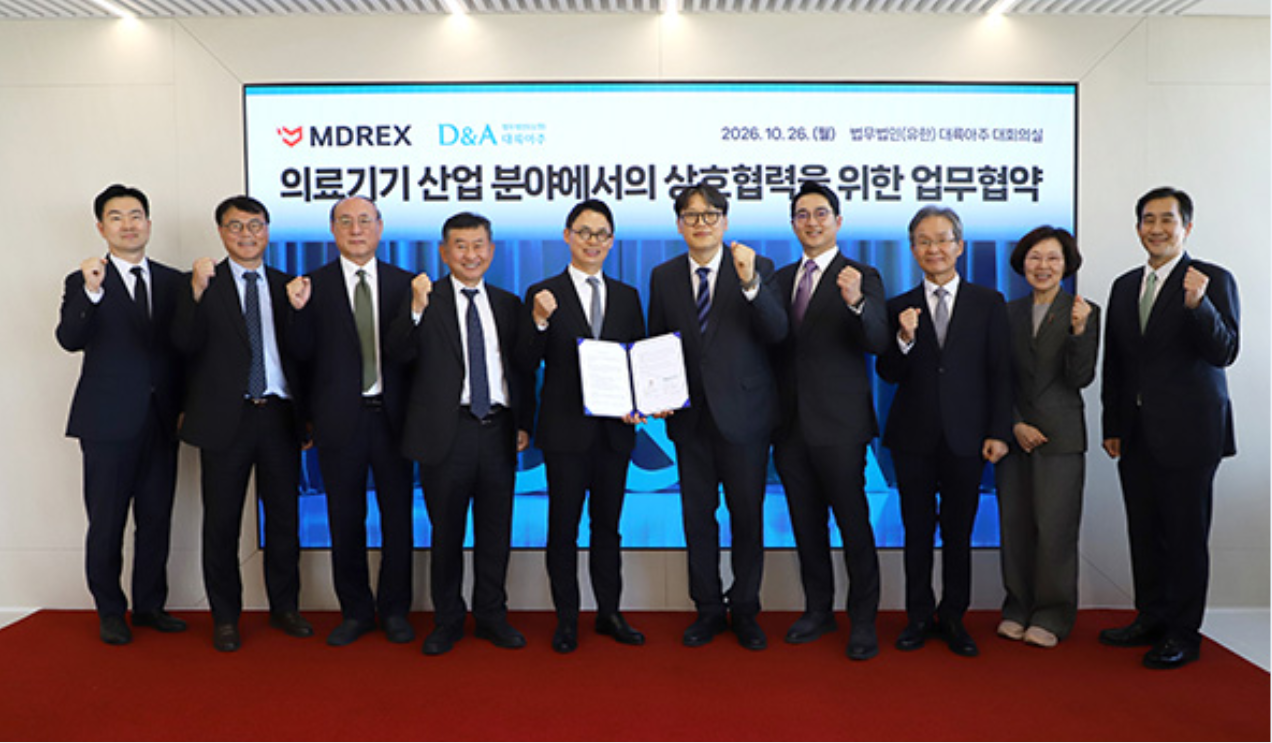
The ceremony was attended by Managing Partner Kyu Chul Lee and attorneys Dong Eon Cha, Kyu Jin Choi, and Seung Jin Kim from D&A LLC, and CEO Yong Woo Kim, Vice President Won Woo Lee, Advisors Yang Ha Cho and Eui Hyung Byun, and Executive Director and CSO Sung Dong Min from MDREX. Managing Partner Kyu Chul Lee said, “We will provide the highest-quality legal advice to support MDREX as it offers companies consulting services in the medical device industry, including regulatory approvals and market access strategies.”
|
|
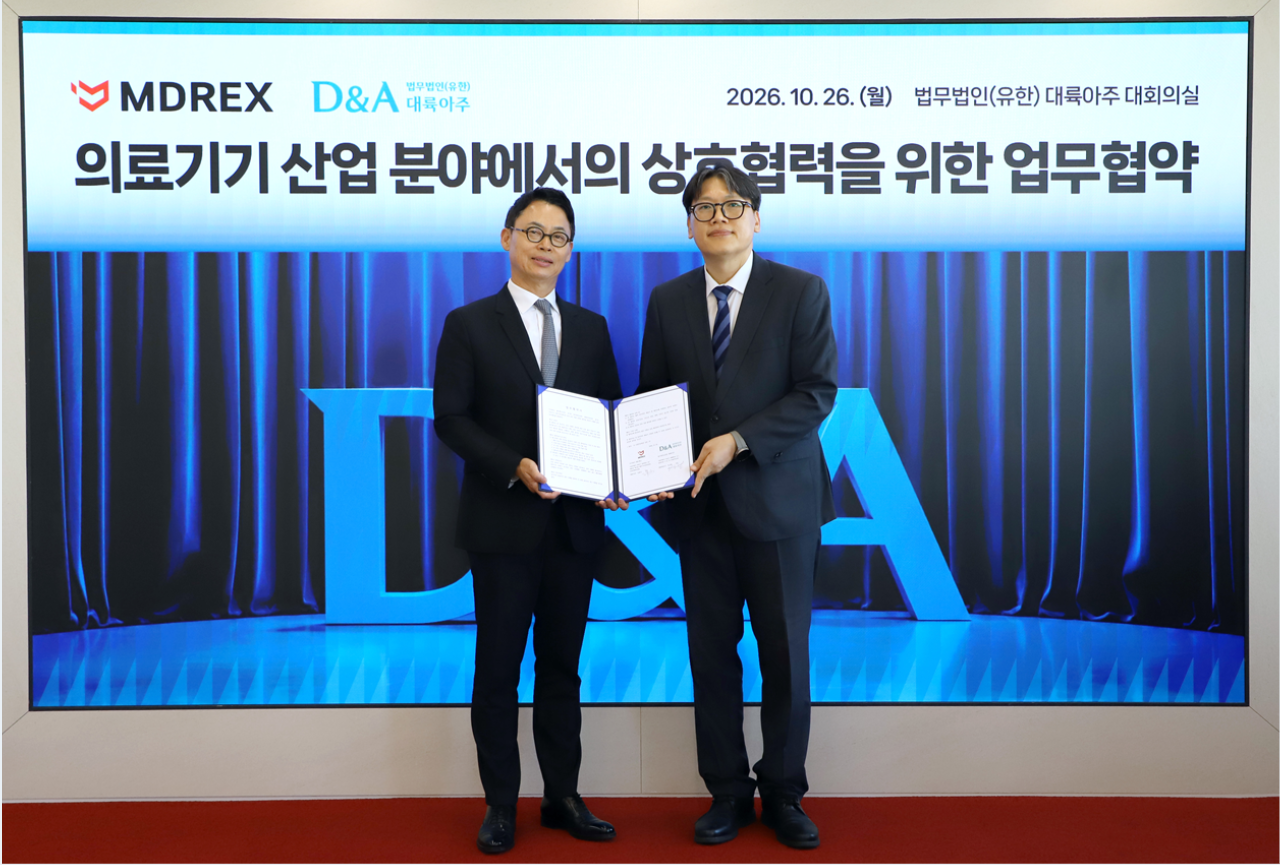
Kyu Chul Lee, Managing Partner of D&A LLC (left), and Yong Woo Kim, CEO of MDREX |
|
|
D&A LLC attorneys, including Managing Partner Kyu Chul Lee, and MDREX executives, including CEO Yong Woo Kim, pose for a commemorative photograph after signing the MOU on October 26.
|
|
|
2. Why Regulatory and Legal Issues Should Be Reviewed Together in the Medical Device Business
Regulatory and legal issues are closely connected throughout medical device development and market entry. For example, introducing an overseas medical device into Korea requires more than obtaining authorization from the Ministry of Food and Drug Safety (MFDS). Companies also need to determine in advance who will hold the authorization and how the authorization and related documentation will be handled when a distribution agreement ends. Unexpected issues during reimbursement listing, or medical device advertising and sales activities that violate applicable laws, may also lead to administrative sanctions or legal disputes.
Meeting regulatory requirements and managing business-related legal risks are therefore important management responsibilities that must be considered together. When regulatory and legal advice are sought separately, however, reconciling the two assessment takes extra time and cost. This MOU closes that gap: MDREX and D&A LLC work together from the strategy stage through execution, giving clients both regulatory expertise and legal certainty in one integrated process.
|
Business Stage
|
Regulatory Issues (MDREX)
|
Potential Related Legal Issues
(In Cooperation with D&A LLC)
|
Korean and International
Regulatory Approval
|
Review of medical device classification and risk class; preparation of technical documentation and clinical data; development and implementation of MFDS authorization strategies
|
Contracts concerning the holding and transfer of regulatory authorizations; agreements between overseas manufacturers and Korean distributors; legal review of technical documentation and intellectual property rights
|
|
GMP and Quality
|
Support for KGMP conformity assessments; establishment of quality management systems for manufacturing and importing; post-market quality management and regulatory compliance
|
Review of manufacturing agreements and Quality Agreements; assessment of quality responsibilities and the scope of liability for damages between manufacturers and distributors
|
Korean and International
Reimbursement Listing
|
Reimbursement listing of medical materials and procedures; new health technology assessment; review of reimbursement eligibility and market access strategies
|
Advice on remedies, including objections to reimbursement listing decisions and administrative appeals and litigation
|
|
Distribution and Sales
|
Establishment of medical device import/export and distribution systems; review of advertising regulations; post-market safety management; compliance with expenditure reporting requirements for economic benefits
|
Review of exclusive distribution, dealership, and contract sales organization (CSO) agreements; legal advice on rebates and fair trade; handling of distribution agreement disputes
|
|
Administrative Sanctions
|
Review of medical device laws and regulatory requirements; development of strategies to remedy violations and implement corrective actions
|
Support for inspections by government authorities such as MFDS, HIRA, and KCS; submission of opinions and legal responses to administrative sanctions; administrative appeals and litigation; resolution of related disputes
|
|
Digital Medical Products
|
Regulatory authorization and clinical evaluation strategies for digital medical products; compliance with software and cybersecurity regulations
|
Legal review of personal information and medical data use; data processing agreements; advice on platform operation and terms of service
|
|
Market Entry and Business Expansion in Korea and Overseas
|
Korean and international authorization strategies; engagement with overseas regulatory authorities; development of reimbursement listing, distribution, and market access strategies
|
Legal advice on establishing companies in Korea and overseas, mergers and acquisitions (M&A), investments and joint ventures (JVs), licensing and distribution agreements, and international transactions
|
3. Medical Device Companies That Can Benefit
Medical device companies face a range of regulatory and legal issues from product development through authorization, reimbursement listing, distribution, and overseas expansion. Insufficient review of regulatory requirements and contractual rights and obligations at the early stages of a business may later result in market entry delays, unexpected costs, and legal disputes. MDREX and D&A LLC provide specialized, collaborative regulatory and legal services for medical device companies in the following situations.
① Companies Importing and Selling Overseas Medical Devices in Korea or Planning to Establish a Korean Subsidiary
Importing and selling overseas medical devices in Korea or entering the Korean market directly as an overseas manufacturer requires not only strategies for medical device authorization, KGMP, reimbursement listing, and distribution, but also legal review of the business structure and related contracts. When a Korean importer or distributor enters into an exclusive distribution agreement with an overseas manufacturer, the parties should clarify in advance not only product supply prices and sales rights, but also who will hold the Korean regulatory authorizations, the conditions for transferring authorizations and reimbursement listing rights, and business continuity upon termination. If the agreement with the manufacturer ends or the distributor changes after the Korean company has made substantial investments in authorization and reimbursement listing, disputes may arise over authorization transfers, the use of technical documentation, inventory handling, and the management of existing customer relationships.
Meanwhile, an overseas manufacturer planning to establish a Korean subsidiary to directly import, sell, and distribute medical devices must prepare comprehensively for incorporation, a medical device import business license, product-specific authorizations, KGMP, reimbursement listing, and the establishment of a distribution system. The subsidiary’s business structure, investment and operating agreements, and the transaction structure and legal responsibilities between the overseas headquarters and the Korean subsidiary should also be reviewed.
② Overseas Medical Device Manufacturers Entering the Korean Market Directly
When an overseas medical device manufacturer that has been importing and selling products through a Korean distributor establishes a Korean subsidiary to operate directly, it must review more than incorporation alone. A comprehensive assessment is needed of the transfer of the distributor’s medical device authorizations, reimbursement listing status, distribution agreements, and related rights and obligations. In particular, transferring medical device approvals, certifications, and notifications held in the existing distributor’s name to the subsidiary requires advance review of authorization transfer procedures, continuity of KGMP conformity recognition and the quality management system, the possibility of succeeding to the reimbursement listing status for medical materials, reimbursement ceiling amounts, and price negotiations. Additional costs or disputes may arise depending on the terms for ending the existing distributor agreement and transferring the business. Due diligence is also critical when assuming a business or product authorization status under the Medical Devices Act, including review of the distributor’s history of administrative sanctions, ongoing investigations or sanction proceedings, and whether post-market safety obligations and legal liabilities will be inherited. Inadequate review may expose the subsidiary to unexpected regulatory obligations or legal risks after its establishment.
③ Korean Medical Device Companies Preparing to Expand into the United States, Europe, Japan, and Other Overseas Markets
To enter overseas markets such as the United States, Europe, and Japan, Korean medical device companies must meet approval, quality management, and reimbursement requirements under each country’s medical device laws. They must also review legal matters necessary for business operations, including the appointment of local representatives and distribution agreements.
| ✔ |
Europe : |
Medical device conformity assessment under the EU MDR and IVDR; engagement with Notified Bodies (NBs); regulatory matters involving Competent Authorities (CAs); appointment of an EU Authorized Representative and review of related agreements |
| ✔ |
United States : |
FDA medical device regulatory pathways (510(k), De Novo, PMA, etc.); compliance with the Quality Management System Regulation (QMSR); review of CMS Medicare coverage and payment matters; appointment of a U.S. Agent and review of related agreements |
| ✔ |
Japan : |
Medical device authorizations involving PMDA and the Ministry of Health, Labour and Welfare (MHLW); QMS conformity assessments; reimbursement listing and reimbursement pricing matters; appointment of a Designated Marketing Authorization Holder (D-MAH) and review of related agreements |
To maintain stable product sales in overseas markets, companies should also review in advance the selection of local distributors and business partners, exclusive distribution rights, sales territories, minimum purchase quantities, authorization-related rights, and conditions for termination and dispute resolution. Agreements with local representatives or distribution partners should clearly define responsibilities for maintaining and modifying authorizations, managing technical documentation, and ensuring business continuity after termination.
④ Companies Facing Government Investigations and Inspections, Regulatory Violations, or Administrative Sanctions
During product development, manufacturing, importation, distribution, and sales, medical device companies may face investigations, inspections, and administrative sanctions from various government authorities, including MFDS, the Korea Customs Service, the Korea Fair Trade Commission, and the Personal Information Protection Commission. The medical device industry is subject to multiple overlapping regulatory areas, including authorization, quality management, health insurance, customs clearance, distribution and sales, and medical data use. It is therefore important to understand each authority’s investigation objectives and applicable laws accurately and develop specialized response strategies that reflect the characteristics of the medical device industry.
|
Government Authority
|
Key Issues (Examples)
|
|
Ministry of Food and Drug Safety
|
Violations of authorization requirements under the Medical Devices Act and related laws; breaches of KGMP and quality management standards; implementation of changes without required change approval; violations of manufacturer and importer compliance obligations; labeling and advertising violations; breaches of post-market safety obligations; administrative sanctions such as business suspension and authorization revocation
|
|
Korea Customs Service
|
Unlawful medical device imports under the Customs Act and related laws; import declaration and customs clearance violations; suspected manipulation of import prices or customs values; appropriateness of transaction prices between related parties; responses to additional customs assessments and investigations
|
|
Korea Fair Trade Commission
|
Unfair trade practices under the Monopoly Regulation and Fair-Trade Act and related laws; disputes involving exclusive distribution and dealership agreements; abuse of superior bargaining position; fair trade issues involving improper customer inducement and rebates
|
|
Personal Information Protection Commission
|
Investigations and sanctions under the Personal Information Protection Act concerning the collection, use, and provision of patient information and medical data; processing of sensitive information; cross-border transfers; personal data breaches; and violations of security safeguard obligations
|
Effective responses to these government investigations and administrative sanctions require not only legal interpretation, but also an understanding of the medical device regulatory framework, the technical characteristics of products, authorization and reimbursement systems, and actual distribution and sales structures.
⑤ Companies Navigating Government Reimbursement Policy Changes
Even after obtaining MFDS authorization and health insurance reimbursement listing, medical device and in vitro diagnostic medical device companies may experience significant effects on product’s commercial viability and business profitability due to changes in government health insurance policies, reductions in payment rates for medical procedures, adjustments to reimbursement ceilings for medical materials, and changes to coverage criteria. For example, the pending cuts to laboratory specimen testing fees could affect not only company revenue, but also R&D investment, product supply, and the quality of patient care. Responding to these policy changes requires more than reviewing whether reimbursement rates are appropriate. It is important to comprehensively analyze the grounds and procedures for policy decisions, clinical and economic impacts, applicable laws, and potential infringements of stakeholders’ rights and interests, and to develop a systematic strategy ranging from submissions to government authorities to legal action.
⑥ Companies Developing and Commercializing AI Medical Devices and Digital Medical Products
Developing and commercializing AI-based diagnostic and therapeutic software and digital medical products requires comprehensive review of authorization, clinical performance evaluation, cybersecurity, post-market safety management, and potential health insurance coverage under the Digital Medical Products Act and medical device legislation. In particular, the collection, use, provision, and management of sensitive medical data held by healthcare institutions—including patient records, medical images, test results, and genomic and genetic information—are important legal issues during AI medical device development and clinical validation. Before using such medical and genetic information for R&D, AI training, clinical trials, or product performance improvement, companies should review the lawful basis for data use under applicable legislation, including the Personal Information Protection Act, the Medical Service Act, and the Bioethics and Safety Act; whether data subject consent is required; the appropriateness of pseudonymization and anonymization; and whether third-party provision and cross-border transfers are permitted.
Note that pseudonymization and anonymization carry different legal standards — pseudonymization alone does not authorize all commercial uses or third-party transfers. Data provision agreements, re-identification risk management, cloud security, and breach liability all require separate attention.
|
|
If you are preparing to enter Korea or expand overseas, or need legal review during authorization, GMP, reimbursement listing, or distribution, please contact MDREX (pro@mdrex.co.kr) anytime. MDREX and D&A LLC partner with client companies to ensure that products approved in Korea are adopted in actual clinical practice — and ultimately achieve commercial success.
|
|
|
C 922, 7, Beobwon-ro 11-gil, Songpa-gu, Seoul, Korea
|
|
|
|
|